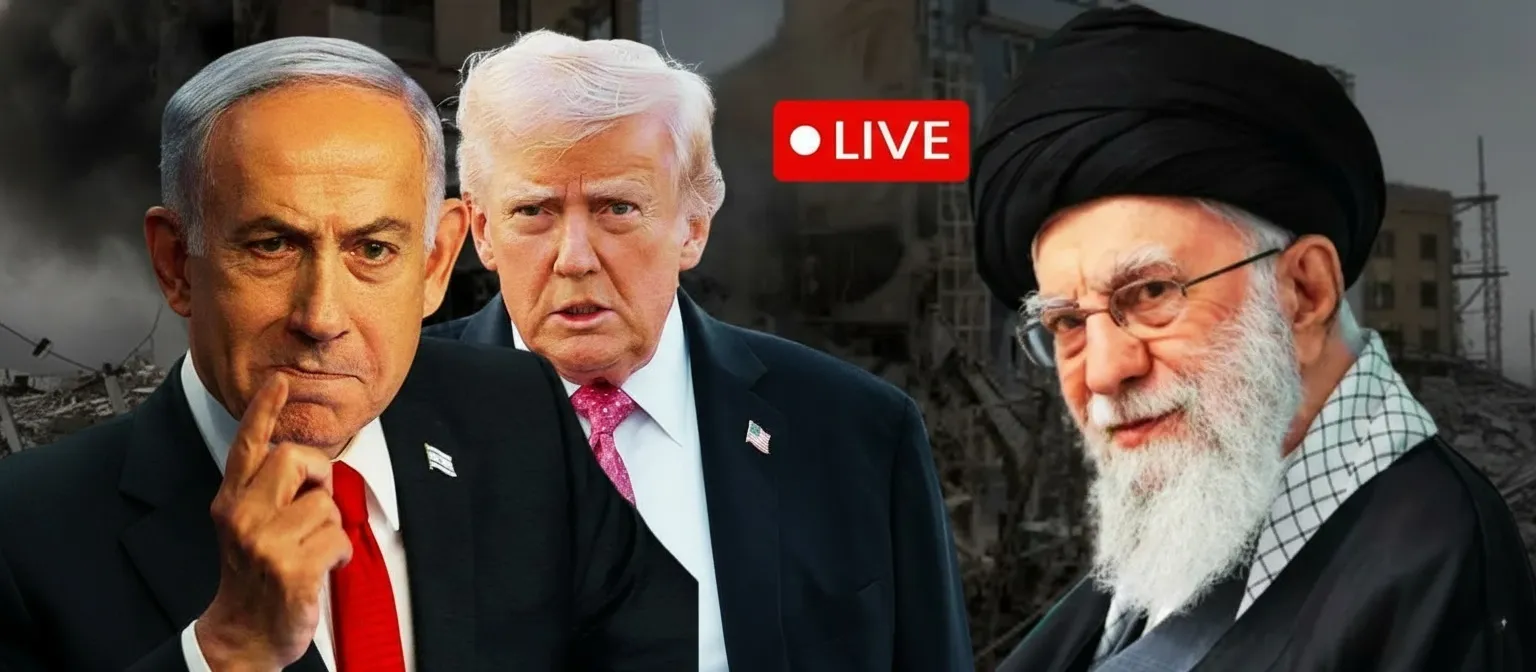
In a seismic moment that has shaken the foundations of the Middle East and reverberated across the globe, Ayatollah Ali Khamenei- Iran’s Supreme Leader for over 36 years, was killed on February 28, 2026, in a joint U.S.-Israeli military strike on his compound in central Tehran.
Confirmed by Iranian state media early Sunday morning, the death of the 86-year-old cleric marks the end of one of the most consequential and controversial authoritarian rules of the modern era.
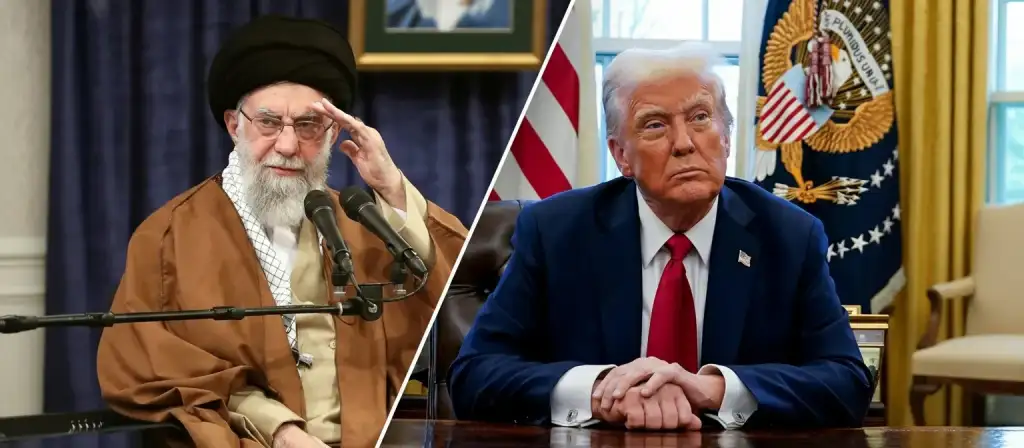
The world is now asking: What happens next?
This blog examines the full picture, the circumstances of his assassination, the geopolitical buildup that led to this moment, the global economic shockwaves, the looming war scenarios, and the profound political vacuum his death has created inside Iran.
The Background: Who Was Ayatollah Ali Khamenei?
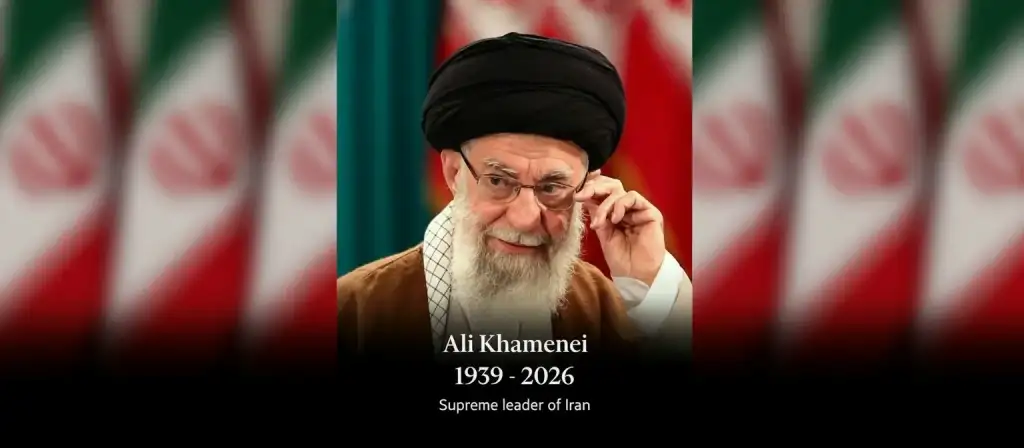
Born on April 19, 1939, in Mashhad, Iran, Ali Hosseini Khamenei rose through the ranks of the Islamic Republic after the 1979 revolution. He served as Iran’s president from 1981 to 1989 and was hand-picked by revolutionary founder Ayatollah Ruhollah Khomeini to succeed him as Supreme Leader, a post he held from June 1989 until his death.
At the time of his death, Khamenei was the longest-serving head of state in the Middle East and the longest-serving Iranian leader since the Shah. His rule was defined by fierce anti-Western ideology, the expansion of Iran’s proxy network across the Middle East, suppression of domestic dissent, and an unrelenting push to develop Iran’s nuclear capabilities.
Critics described him as a repressive despot responsible for the deaths of thousands of Iranian citizens.
Human rights organizations estimate that more than 7,000 people were killed during mass protests that erupted in late December 2025 alone. Supporters, however, revered him as a guardian of the Islamic Revolution and a bulwark against Western imperialism.
The Final Chapter: How Did Khamenei Die? Causes and Circumstances of Death.
Khamenei was killed in a precision airstrike carried out jointly by Israeli and U.S. military forces on February 28, 2026.
The strike targeted his compound in central Tehran, obliterating the complex in what Israeli officials called a ‘preemptive operation‘ aimed at neutralizing the existential threat posed by the Iranian regime.
U.S. President Donald Trump confirmed the killing via Truth Social hours before Iranian state media made the announcement.
’He was unable to avoid our Intelligence and Highly Sophisticated Tracking Systems and, working closely with Israel, there was not a thing he, or the other leaders that have been killed along with him, could do,’ Trump wrote.
The strike also killed several other top Iranian officials, including the country’s Defense Minister, the Commander of the Islamic Revolutionary Guard Corps (IRGC), and the Secretary of Iran’s National Security Council.
Israeli Prime Minister Benjamin Netanyahu stated the objective of the operation was to ‘remove the existential threat posed by the terrorist regime in Iran.’
The timeline of events leading to the strike includes: Israel’s June 2025 strikes on Iran’s nuclear enrichment sites; U.S. airstrikes on three Iranian nuclear facilities on June 21, 2025, which Trump claimed had been ‘completely and totally obliterated’; Iran’s retaliatory missile strikes; and a cascade of failed diplomatic negotiations that began earlier in 2025 when Trump pressured Iran to abandon its nuclear program.
When negotiations collapsed, the two sides moved from proxy conflict to direct confrontation.
Geopolitical Buildup: The Road to Khamenei’s Assassination
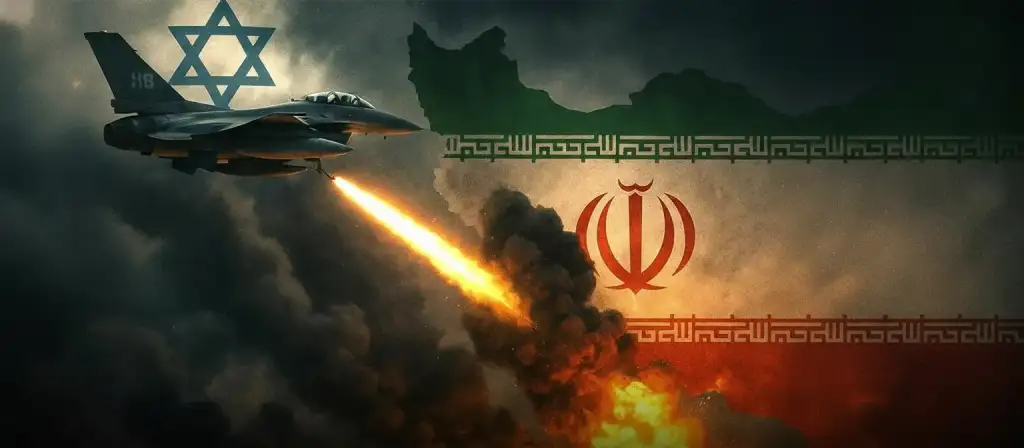
The death of Khamenei did not happen in isolation. It was the culmination of years of escalating tensions between Iran and its adversaries.
The chain of events that ultimately led to this moment began with the Hamas attack on Israel on October 7, 2023, which killed nearly 1,200 people and kidnapped 251 others.
Iran-backed Hezbollah immediately joined the conflict, and Israel began systematically dismantling Iran’s proxy network across the region.
By December 2024, Syrian dictator Bashar al-Assad, a critical Iranian ally, had fallen and fled to Russia, weakening Tehran’s regional foothold significantly.
Throughout 2025, Israel and the United States escalated their campaign against Iran’s nuclear ambitions with direct military strikes.
Iran retaliated, and the two sides exchanged missile fire in what became known as the 12-day armed conflict of mid-2025.
Simultaneously, Iran was gripped by mass domestic unrest. Protests that began in late 2025 saw demonstrators chanting ‘Death to the Dictator’ and ‘Death to Khamenei.’ Khamenei acknowledged some legitimate economic grievances but authorized brutal crackdowns that resulted in thousands of deaths.
With his regime weakened internally and externally, the stage was set for the final strike.
Iran’s Succession Crisis: Who Will Replace Khamenei?
Perhaps the most urgent question following Khamenei’s death is: Who leads Iran now?
Iran’s constitution requires that the Assembly of Experts appoint a new Supreme Leader.
However, the military strikes that killed Khamenei also eliminated many of Iran’s top security and political figures, creating a profound leadership vacuum at the worst possible moment.
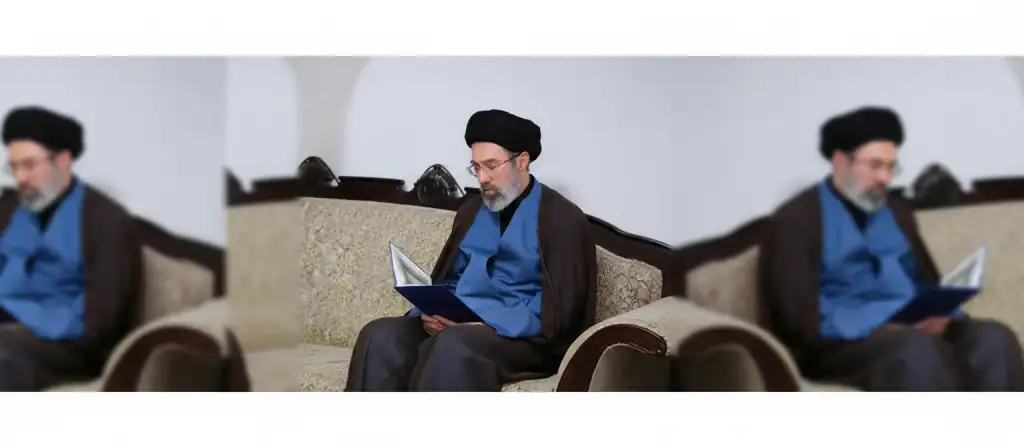
Mojtaba Khamenei, one of the Supreme Leader’s sons, had long been discussed as a potential successor.
Israeli officials targeted him in the strikes, though intelligence assessments suggest he survived.
His appointment would be historically unprecedented and deeply controversial, as hereditary succession has no precedent in the Islamic Republic.
Ali Larijani, Secretary of Iran’s Supreme National Security Council, former parliament speaker, and one of Khamenei’s closest confidants, has emerged as the most senior civilian official still standing. In a defiant post on X following Khamenei’s death, Larijani vowed that Iran would deliver Israel and the United States an ‘unforgettable lesson.‘
Analysts at the Stimson Center note that Iran likely had contingency plans for this scenario.
A transitional governing council may be formed, but whether it will hold authority over a fractious military establishment, particularly the IRGC, remains deeply uncertain.
Iran-Israel-US War Scenarios: What Happens Next on the Battlefield?
The military situation following Khamenei’s assassination is volatile and rapidly evolving.
Within hours of the announcement of his death, the IRGC issued a chilling warning:
‘The most intense offensive operation in the history of the armed forces of the Islamic Republic of Iran will begin in moments, targeting Israel and American terrorist bases.’
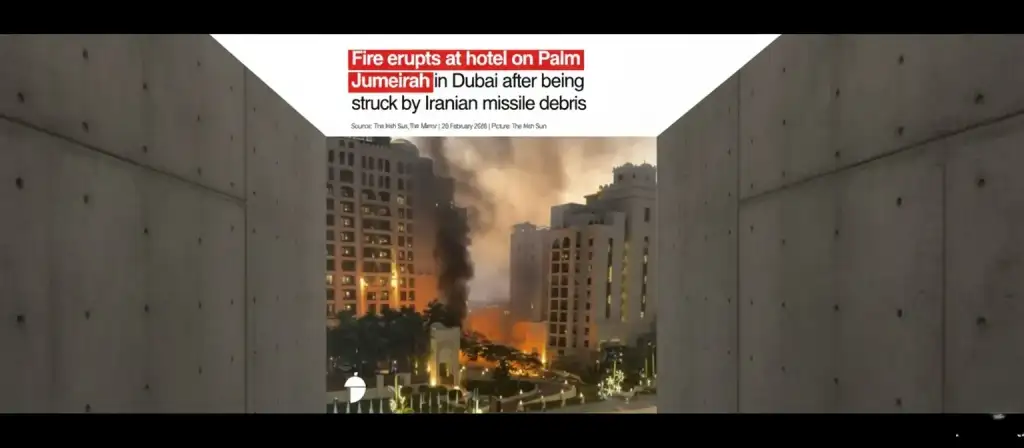
Iran has already launched retaliatory attacks on U.S. military installations in Bahrain, Kuwait, and Qatar. Gulf states, including Saudi Arabia, the UAE, and Qatar, are reportedly responding ‘defensively and offensively‘ to Iranian aggression.
NATO Secretary General Mark Rutte has been briefed by the U.S. on the situation.
Several war scenarios now present themselves.
First, a full regional war: if Iran’s IRGC and proxy militias in Iraq, Yemen, and Lebanon launch coordinated mass strikes on Israel and U.S. bases, the conflict could engulf the broader Middle East.
Second, regime collapse: Trump has called on Iranian security forces to ‘peacefully merge with Iranian Patriots,’ suggesting the U.S. is banking on internal defections triggering a regime collapse from within.
Third, a negotiated ceasefire: with key leadership eliminated, surviving Iranian officials may seek de-escalation. However, Larijani’s defiant statement suggests Tehran is not ready to capitulate.
Former Iranian Crown Prince Reza Pahlavi, who has been vocal during the protests, urged Iranian security forces to ‘join the nation and help ensure a stable and secure transition,’ signaling that exile opposition groups are positioning themselves for a potential political opening.
Economic Fallout: How Khamenei’s Death Will Impact Iran’s Economy and Global Markets
The economic consequences of Khamenei’s death and the ongoing military conflict are severe and far-reaching, both for Iran and for the global economy.
Iran’s economy was already in dire straits before the strikes.
The Iranian rial had been collapsing, inflation was rampant, and unemployment among young people was staggering.
Khamenei himself had acknowledged these economic grievances during the 2025-2026 protests. The military strikes have now compounded these pre-existing vulnerabilities dramatically.
For global oil markets, the conflict is deeply alarming.
Iran is one of the world’s major oil producers, and the Strait of Hormuz, through which approximately 20% of the world’s oil supply passes, is under Iranian territorial influence.
Any Iranian attempt to blockade or mine the strait in retaliation would send oil prices soaring, potentially triggering a global recession.
Analysts are already warning of oil price spikes above $120-$150 per barrel if the conflict escalates further.
Global financial markets reacted with immediate volatility to news of Khamenei’s death.
Safe-haven assets such as gold and U.S. Treasury bonds surged, while equity markets in Asia and Europe opened sharply lower.
The defense sector saw massive gains, while airline stocks and tourism-related equities dropped significantly.
Iran’s own economy faces near-total collapse. Foreign investment, already minimal due to decades of sanctions, has effectively ceased.
Iran’s banking sector, already cut off from SWIFT, faces the prospect of further isolation.
The destruction of infrastructure in the strikes, combined with the political chaos of a succession crisis, means economic recovery is years away under even the most optimistic scenarios.
Impact on Iran’s Nuclear Program After Khamenei
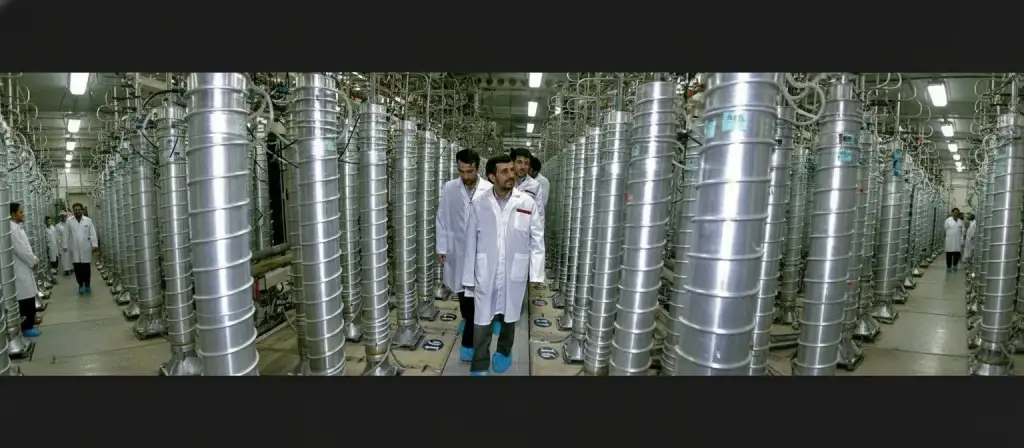
One of the primary stated objectives of the U.S.-Israeli military campaign was to permanently set back Iran’s nuclear ambitions.
In June 2025, U.S. airstrikes targeted three of Iran’s key nuclear enrichment facilities. With Khamenei now dead, the man who authorized and oversaw the nuclear program for decades, its future is deeply uncertain.
Under Khamenei, Iran had enriched uranium to near weapons-grade levels, coming dangerously close to the threshold needed to build a nuclear bomb.
The destruction of key facilities and the death of senior nuclear scientists during the 2025 strikes significantly degraded these capabilities.
Whether a successor regime will prioritize rebuilding the program, or use its abandonment as a bargaining chip for sanctions relief, will be one of the defining questions of the post-Khamenei era.
Domestic Reaction in Iran: Protests, Mourning, and the Question of Revolution
Inside Iran, reactions to Khamenei’s death are sharply divided along generational and ideological lines.
The government has declared 40 days of national mourning and describes Khamenei as a ‘martyr.’
State media has framed the strikes as an act of foreign aggression meant to destabilize the Islamic Republic.
But on the streets, a different reaction is emerging. Following months of protests in which young Iranians chanted for Khamenei’s overthrow, many Iranians — particularly the younger generation, are not mourning.
A 25-year-old quoted by Reuters from Kuhdasht expressed a sentiment shared by many: ‘I just want to live a peaceful, normal life. Those policies may have made sense in 1979, but not today.’
The critical question is whether the popular unrest that preceded Khamenei’s death will now translate into a genuine revolution.
With the IRGC threatening offensive operations and the government declaring mourning, any popular uprising in this immediate period faces violent suppression.
But the long-term political landscape of Iran has been fundamentally altered.
Global Reactions: World Leaders Respond to Khamenei’s Death
Reactions from world leaders ranged from triumphant to deeply alarmed.
President Trump celebrated the killing, calling Khamenei
‘one of the most evil people in History’
and framing his death as justice for American and global victims of Iranian-backed terrorism.
Israeli Prime Minister Netanyahu hailed the operation as a historic turning point for the Middle East and the world.
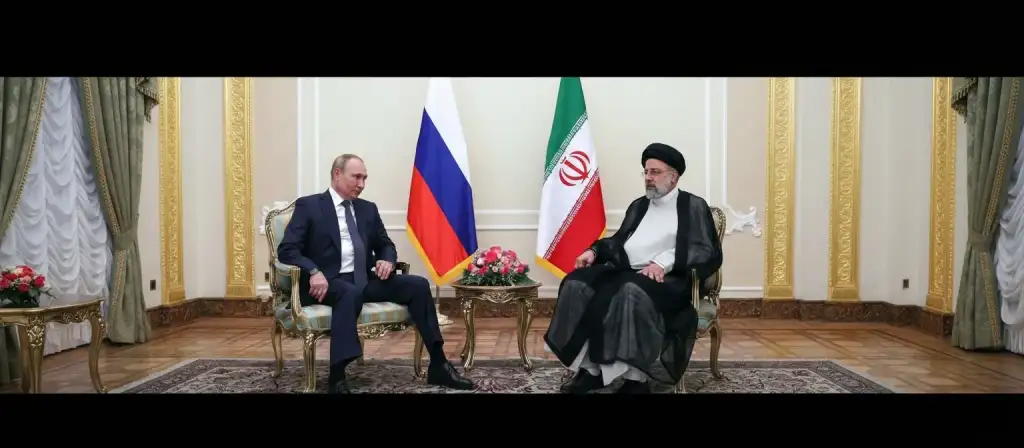
By contrast, Russia and China, both of which maintained strategic ties with Tehran, condemned the strikes as illegal acts of aggression.
Russia’s foreign ministry called the assassination of a sitting head of state a ‘grave violation of international law.’ Anti-war protesters gathered outside 10 Downing Street in London and at other Western capitals, condemning the military action.
The United Nations Secretary-General called for immediate de-escalation and an emergency session of the UN Security Council.
Arab states in the Gulf, while not publicly celebrating, are said to be quietly relieved at the removal of a figure they viewed as the primary driver of regional instability. However, all are acutely aware that the chaos following his death may prove equally destabilizing.
The Legacy of Ali Khamenei: 36 Years That Shaped the Middle East
Whatever one’s political perspective, the death of Ali Khamenei ends a 36-year chapter in Middle Eastern history that cannot be understated. He transformed Iran from a post-revolutionary state into a regional superpower with proxy forces stretching from Lebanon to Yemen, Iraq to Syria.
He built and sustained the ‘Axis of Resistance’ that fundamentally challenged American and Israeli influence in the region.
He also presided over the brutal suppression of multiple waves of popular protest, the execution of thousands of political prisoners, and the imposition of strict theocratic rule on 90 million Iranians.
Karim Sadjadpour of the Carnegie Endowment for International Peace described him as ‘an accident of history’ who went from a weak president to one of the five most powerful Iranians of the past century.
His death does not resolve the underlying tensions of the Middle East. But it does close the book on a specific era defined by his vision — one of defiant anti-Westernism, ideological rigidity, and proxy warfare.
What follows will be written by forces not yet fully visible, in a region still convulsed by conflict.
A World Transformed, The Post-Khamenei Era Begins
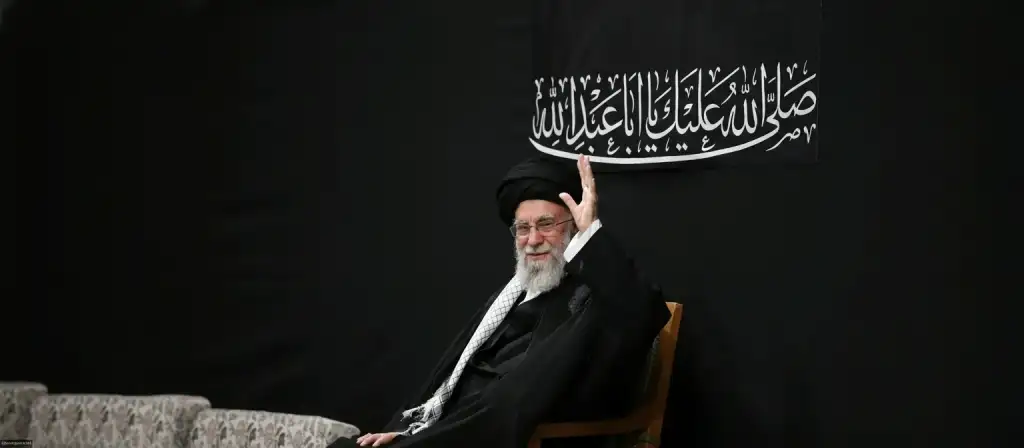
The assassination of Ayatollah Ali Khamenei on February 28, 2026, is one of the most consequential events in modern Middle Eastern history. It simultaneously removes the figurehead of Iranian theocracy, destabilizes one of the world’s most strategically important regions, threatens global energy markets, and opens, however uncertainly, a potential path toward a different Iran.
The coming days and weeks will determine whether Iran’s regime collapses under the weight of military pressure and popular revolt, whether a successor leadership emerges capable of stabilizing the country, or whether the region descends into a wider war that draws in more nations.
The world is watching, holding its breath, as history pivots on this singular moment.
Stay updated with the latest developments as this story continues to evolve.