They Said Nokia Was Finished. They Were Spectacularly Wrong.
Rewind to 2012. Nokia, the undisputed king of mobile phones for over a decade, is bleeding billions. The iPhone has obliterated their empire. Tech journalists are writing Nokia’s obituary.
Investors are fleeing. The company that put a phone in every pocket is now the punchline of Silicon Valley jokes.
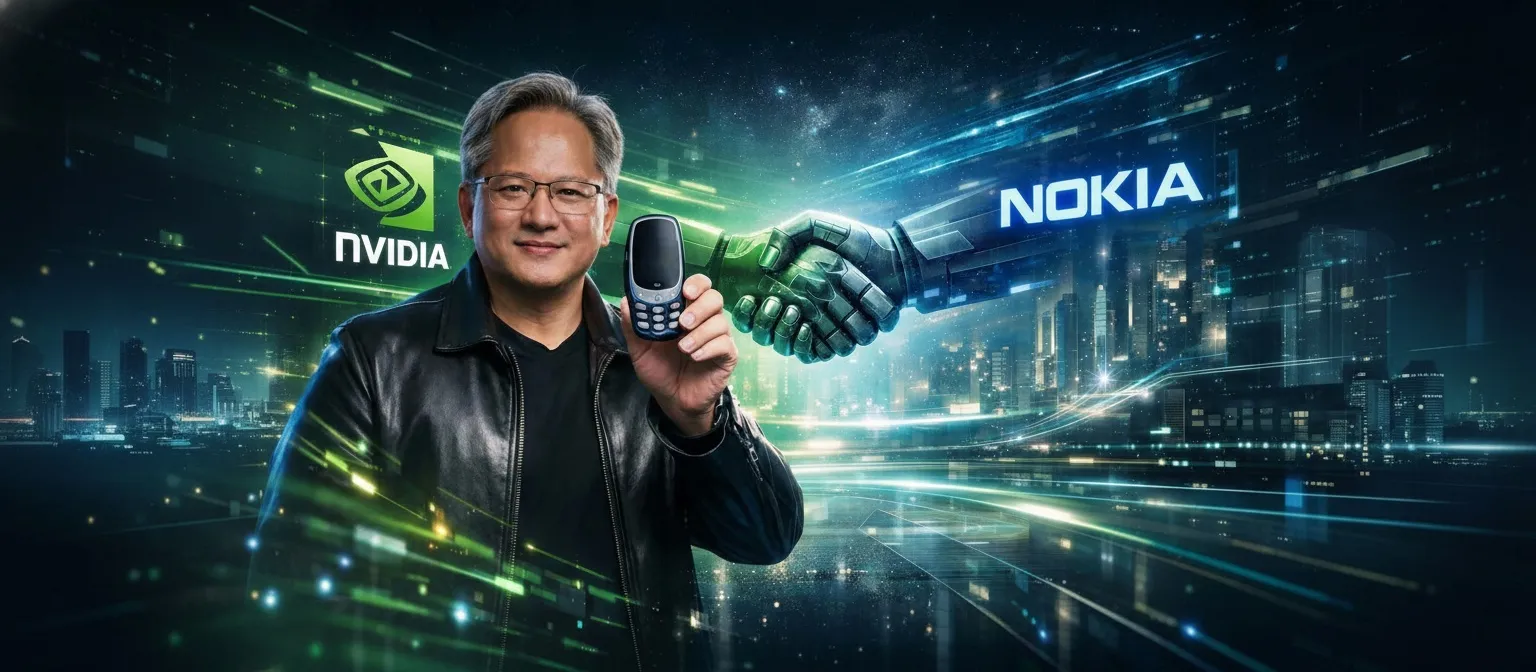
Fast forward to 2026. NVIDIA,
yes, that NVIDIA, the trillion-dollar AI chip maker
—just invested $1 billion in Nokia, making it their second-largest investment. Wall Street analysts are projecting Nokia’s AI-powered network technology could capture a slice of a $200 billion market by 2030.
What happened in those thirteen years?
The answer reads like a corporate thriller with plot twists that would make even the boldest CEO nervous.
The Fall: When Giants Stumble
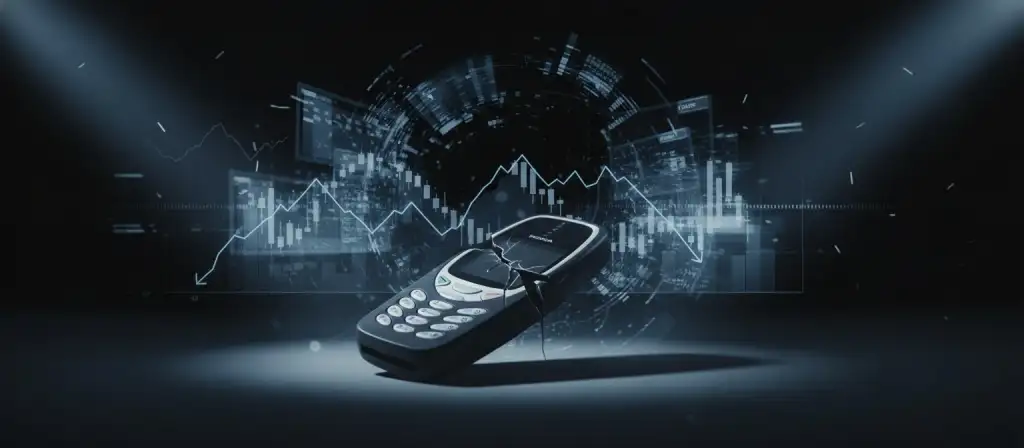
Let’s rewind to understand just how spectacular Nokia’s collapse was. This wasn’t a slow decline—it was a cliff dive. Nokia’s market dominance evaporated almost overnight when Apple launched the iPhone in 2007.
By 2012, the company had lost staggering amounts in market value, watching helplessly as smartphones redefined an industry Nokia had ruled with an iron fist.
But here’s where the story gets interesting. While everyone was writing Nokia’s eulogy, someone inside the Finnish headquarters was plotting something audacious.
Something that would make no sense to conventional business wisdom. Something that
looked like surrender but was actually a chess move worthy of a grandmaster.
The Perfect Crime: Selling Defeat for Billions
In 2013, Nokia made a shocking announcement: they were selling their entire phone business to Microsoft for 5.44 billion euros.
The tech world gasped. Nokia was giving up! The mighty had fallen!
Microsoft CEO Steve Ballmer was celebrated for acquiring Nokia’s manufacturing prowess and engineering talent.
Except… Nokia had pulled off what might be the most brilliant corporate maneuver of the century.
Hidden in the fine print of that deal was Nokia’s real genius.
They kept two things: their massive patent portfolio and the Nokia brand name. At the time, it seemed like keeping souvenirs from a sinking ship. But Nokia’s leadership knew something Microsoft didn’t.
Those patents? They covered fundamental technologies that every smartphone manufacturer would need for decades. The Nokia brand? It still carried weight and recognition worldwide.
Within a few years, Nokia’s licensing revenue from those patents was generating hundreds of millions annually. Companies building smartphones had to pay Nokia for the privilege of using technologies Nokia had pioneered.
Meanwhile, Microsoft? They sold Nokia’s phone business just a few years later for pocket change, a fraction of what they’d paid.
Nokia had timed their exit perfectly, selling at the peak price and keeping the only assets that mattered.
It was the corporate equivalent of selling your house right before the market crash but keeping the oil well in the backyard.
The Plot Thickens: A 15 Billion Euro Gamble
But Nokia wasn’t done. Not even close.
In 2015, while still recovering from their phone business sale, Nokia dropped another bombshell: they were acquiring Alcatel-Lucent for a staggering 15.6 billion euros.
Critics were baffled. Had Nokia learned nothing? Were they throwing good money after bad?
This is where Nokia’s transformation becomes almost mystical in its strategic brilliance.
Alcatel-Lucent wasn’t just any telecommunications company. Buried within this acquisition was Bell Labs—arguably the most legendary research institution in technological history.
This is the place where the transistor was invented. Where the laser was developed. Where UNIX was born. Bell Labs had more Nobel Prizes on its walls than most countries.
Nokia had just acquired the R&D equivalent of Excalibur.
But that wasn’t all. The acquisition brought critical IP assets in optical networking, fiber optics, and network infrastructure—technologies that would become essential as the world moved toward 5G and cloud computing.
Nokia wasn’t just buying a company; they were buying the future of telecommunications infrastructure.
The Purge: Burning Down to Rebuild
Here’s where Nokia’s story takes its darkest turn.
Between the phone sale and the Alcatel-Lucent acquisition, Nokia did something almost unheard of in corporate history: they replaced 99% of their workforce and 80% of their board members. Let that sink in.
Nearly everyone who had built Nokia into a mobile phone giant was gone.
This wasn’t downsizing. This was corporate exorcism.
Nokia’s leadership had identified something toxic in their culture—the very DNA that had made them successful in the mobile phone era was preventing them from succeeding in the new world.
The engineers who’d perfected T9 texting couldn’t think in terms of app ecosystems. The executives who’d mastered carrier relationships couldn’t pivot to network infrastructure sales.
So Nokia burned it all down. It was brutal. It was controversial. And according to every business textbook, it should have failed catastrophically.
Instead, it worked.
The Resurrection: Nokia’s New Identity
By 2020, a new Nokia had emerged from the ashes—one that barely resembled the company that had sold phones to your parents.
Modern Nokia operates in four dimensions:
Mobile Networks:
They’re not selling phones; they’re building the invisible networks that carry every call, text, and TikTok video.
Nokia’s 5G infrastructure powers telecommunications carriers worldwide, and they’re already developing 6G technology that will make today’s networks look like dial-up modems.
Network Infrastructure:
Those massive data centers run by Amazon, Google, and Microsoft?
Nokia supplies the networking equipment that makes them work. They’ve become the plumbers of the internet age—invisible but indispensable.
Cloud and Network Services:
Nokia’s software helps businesses transform digitally, managing complex networks with AI-driven intelligence.
Patent Licensing:
Remember those patents they kept? They’re still printing money, generating hundreds of millions from intellectual property developed decades ago.
Oh, and one more thing that sounds like science fiction: Nokia built the first 4G network on the Moon for NASA.
Yes, the Moon.
While their competitors were fighting over smartphone market share, Nokia was literally reaching for the stars.

The NVIDIA Twist: Enter the AI Era
Now we arrive at 2026 and the move that reveals Nokia’s true endgame.
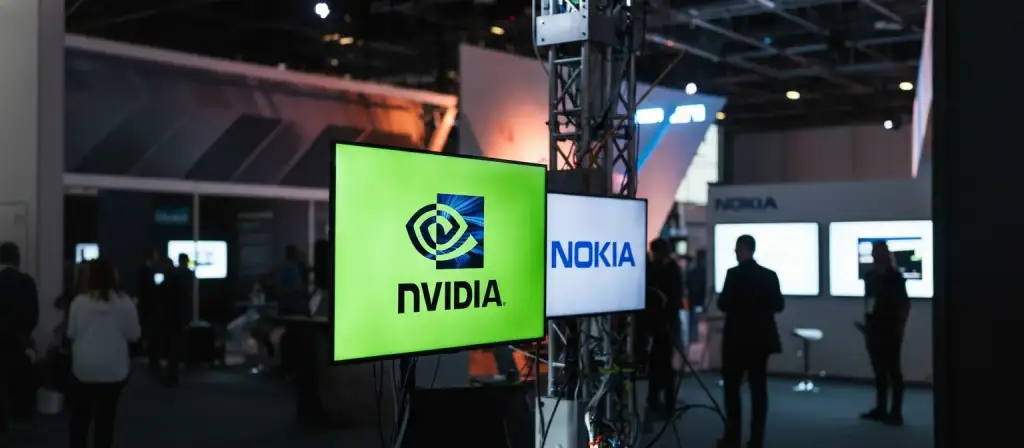
When NVIDIA invested $1 billion in Nokia, it wasn’t charity.
NVIDIA doesn’t make billion-dollar bets on nostalgia. They saw something in Nokia that most people missed: the company was positioned perfectly at the intersection of telecommunications and artificial intelligence.
The partnership focuses on AI-RAN technology—Artificial Intelligence Radio Access Network.
Here’s why this matters: imagine mobile towers that don’t just transmit signals but think. Towers that use AI to predict network congestion, optimize signal strength in real-time, allocate bandwidth intelligently, and adapt to usage patterns instantly.
Nokia’s 5G and 6G expertise combined with NVIDIA’s AI chips creates something unprecedented: intelligent infrastructure that learns and evolves. It’s not just faster networks; it’s smarter networks.
And the market? Analysts project AI-RAN could exceed $200 billion by 2030. Nokia didn’t just survive—they positioned themselves at the center of the next technological revolution.
The Method Behind the Madness
Looking back at Nokia’s journey, patterns emerge that defy conventional business wisdom:
They sold weakness, kept strength. When Nokia sold their phone business, they shed the part that was dying and kept the immortal assets—patents and brand recognition that would generate revenue for decades.
They bought the future, not the present. The Alcatel-Lucent acquisition looked expensive until you realized Nokia was buying Bell Labs and the intellectual foundation for next-generation networks.
They embraced ruthless transformation. Replacing 99% of your workforce sounds insane until you understand that the old culture was incompatible with the new mission.
Sometimes you can’t renovate; you have to demolish and rebuild.
They zigged when everyone zagged. While competitors fought over smartphone market share, Nokia quietly became essential to the infrastructure that makes all smartphones work.
They partnered with power. The NVIDIA investment wasn’t just capital—it was a strategic alliance that positioned Nokia at the forefront of AI-powered telecommunications.
The Verdict: Nokia’s Unfinished Story
Today’s Nokia bears almost no resemblance to the company that made your first cell phone. They’ve transformed from consumer hardware to enterprise infrastructure.
From making phones to making the networks that power every phone. From fighting Apple and Samsung to enabling the technologies they all depend on.
The company that started manufacturing toilet paper in 1865, dominated mobile phones in the 1990s, nearly died in 2012, and emerged as an AI-powered network infrastructure giant by 2026 has proven one thing: corporate death sentences can be premature.
Nokia’s comeback story isn’t finished.
With 5G still rolling out globally, 6G development accelerating, and AI-powered networks just beginning their growth trajectory, Nokia’s most audacious transformation might still be ahead.
The company that couldn’t compete with the iPhone found something better: they became the invisible foundation that makes the iPhone—and every other connected device—actually work.
Not bad for a “dead” company.
Nokia’s resurrection proves that in technology, today’s loser can become tomorrow’s kingmaker.
Through strategic asset preservation, bold acquisitions, cultural transformation, and visionary partnerships, Nokia transformed from smartphone casualty to telecom innovator.
Their story reminds us that in business, the best comeback isn’t reclaiming your old throne—it’s building an entirely new kingdom while everyone’s watching the old one burn.